
 Post by
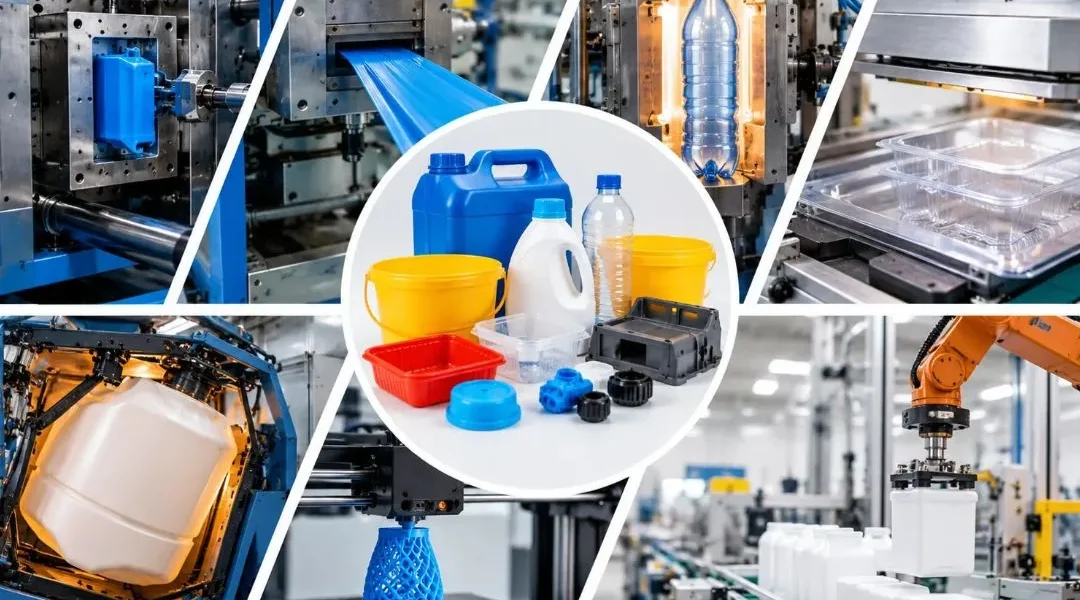
Plastic Manufacturing Techniques help manufacturers improve production efficiency, maintain product quality, and reduce material waste. From automotive components and packaging to construction materials and consumer products, different manufacturing methods serve different industrial needs. Choosing the right technique depends on product design, material type, production volume, and budget. Understanding these methods helps businesses select suitable production processes, manage operating costs, and achieve consistent results.
Why Are Modern Plastic Manufacturing Methods Important?
Modern manufacturing methods help businesses produce plastic components with greater accuracy and consistency. They also support better material utilisation and help reduce unnecessary production delays.
Higher productivity: Efficient processes help increase output and reduce avoidable downtime.
Consistent quality: Controlled production conditions minimise variations between products.
Reduced material waste: Better process management limits rejected parts and excess material.
Design flexibility: Different methods support various product shapes, sizes, and structures.
Cost efficiency: Improved operations help control material, labour, energy, and maintenance expenses.
Selecting appropriate Plastic Manufacturing Techniques allows businesses to match production processes with their specific industrial requirements.
Here Are the 7 Innovative Plastic Manufacturing Techniques
Different production methods offer unique advantages depending on the intended application. The following techniques cover high-volume manufacturing, continuous production, hollow products, prototyping, and automated process control.
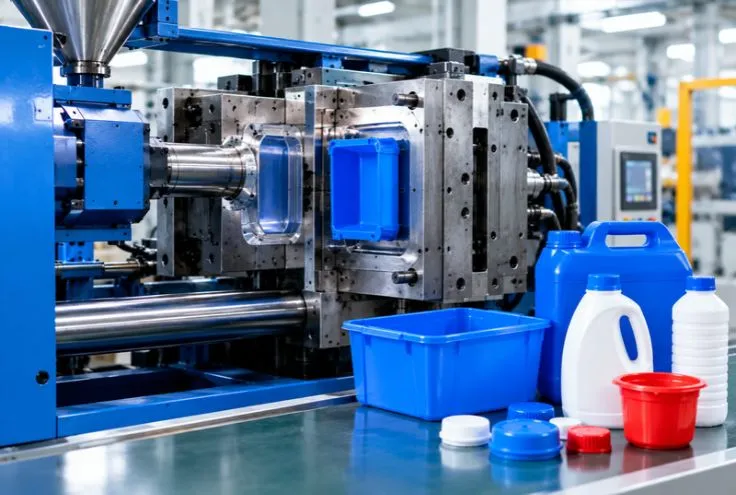
1. Injection Moulding for High-Volume Production
Injection moulding is widely used to manufacture large quantities of identical plastic components. The process involves heating plastic material until it melts, injecting it into a mould, and cooling it to achieve the required shape.
Common applications: Automotive components, bottle caps, electronic housings, and household products.
Key benefits: Fast production cycles, consistent dimensions, and suitability for large production runs.
Manufacturers should consider mould design, tooling costs, cooling time, and material compatibility before selecting this method. Once properly configured, injection moulding can produce thousands of components with consistent specifications and limited manual intervention.
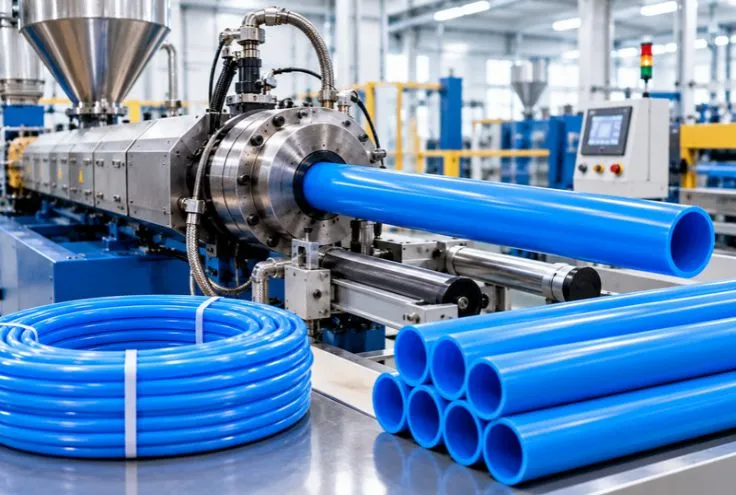
2. Extrusion for Continuous Plastic Products
Plastic extrusion produces continuous products by heating plastic material and forcing it through a specially designed die. The output is then cooled and cut or wound according to the required dimensions.
Common applications: Pipes, tubes, plastic sheets, films, cable insulation, and window profiles.
Key benefits: Continuous production, uniform product shapes, and efficient manufacturing of long components.
Temperature regulation, material flow, screw speed, and die design are important factors in extrusion. Maintaining suitable operating conditions helps prevent surface defects and dimensional variations during extended production runs.
3. Blow Moulding for Hollow Plastic Products
Blow moulding creates hollow plastic products by expanding heated plastic inside a mould using compressed air. The material takes the required shape before being cooled and removed.
Common applications: Beverage bottles, detergent containers, industrial tanks, and automotive fluid reservoirs.
Key benefits: Efficient container production, flexible product designs, and suitability for hollow components.
Manufacturers must pay attention to wall thickness and material distribution. Uneven thickness can affect product strength and durability. Appropriate heating, air pressure, mould design, and cooling conditions help produce reliable components.
4. Thermoforming for Lightweight Plastic Products
Thermoforming involves heating a plastic sheet until it becomes flexible, shaping it over or inside a mould, and cooling it to retain its form. Vacuum pressure or mechanical force may be used depending on the application.
Common applications: Packaging trays, disposable containers, protective inserts, equipment covers, and interior panels.
Key benefits: Flexible designs, lightweight products, and relatively simple tooling for suitable applications.
The final product depends on sheet temperature, forming pressure, material thickness, and trimming accuracy. Proper settings help manufacturers produce components that meet the required dimensions while minimising material waste.
5. Rotational Moulding for Large Hollow Components
Rotational moulding, also known as rotomoulding, produces hollow plastic products by heating material inside a rotating mould. The material gradually coats the internal surfaces before the product is cooled and removed.
Common applications: Water storage tanks, industrial containers, agricultural components, and outdoor furniture.
Key benefits: Large hollow structures, complex shapes, and durable products with relatively uniform walls.
This method is suitable for products whose size and design make rotational moulding practical. However, heating and cooling cycles can be longer than those of some alternative processes. Manufacturers should assess cycle time, expected demand, and production costs before investing in this method.
6. 3D Printing for Rapid Prototyping
Three-dimensional printing, also known as additive manufacturing, creates plastic objects layer by layer from a digital design. It is especially useful for developing prototypes and testing new product concepts before investing in production tooling.
Common applications: Product samples, custom fixtures, prototype housings, engineering models, and specialised components.
Key benefits: Flexible design changes, faster prototype development, and reduced dependence on dedicated moulds during testing.
For example, a manufacturer developing an electronic enclosure can print a prototype, test its dimensions, and modify the design before mass production. Printing speed, material strength, surface finish, and unit cost should still be assessed before choosing this method for larger production volumes.
7. Automation and Smart Process Monitoring
Automation and digital monitoring help manufacturers manage production processes through robotic handling, automated material feeding, sensors, and quality inspection systems.
Common applications: Material handling, product sorting, machine monitoring, automated inspection, and production line management.
Key benefits: Reduced repetitive manual work, improved process consistency, and faster identification of production issues.
Sensors can identify temperature fluctuations and other changes that may affect product quality. Automated inspection systems can also detect certain visible defects or dimensional variations, depending on their capabilities.
Businesses should assess their operational challenges, integration requirements, and workforce training needs before investing in automation.
How to Choose the Right Manufacturing Method
Choosing suitable Plastic Manufacturing Techniques requires a practical assessment of the product and the manufacturer’s objectives.
Consider these six factors before making a decision:
1. Product design: Determine whether the component is solid, hollow, flexible, thin-walled, or geometrically complex.
2. Production volume: Injection moulding may suit large quantities of identical components, while extrusion is suitable for continuous products.
3. Material compatibility: Check whether the process supports the plastic’s melting characteristics, strength, and chemical resistance.
4. Tooling and operating costs: Evaluate equipment investment, mould expenses, energy consumption, labour, and maintenance.
5. Quality requirements: Consider dimensional tolerances, surface finish, durability, and relevant industry standards.
6. Future demand: Assess whether the selected process can accommodate expected growth without unnecessary investment.
Manufacturers should compare the total cost per acceptable finished product instead of focusing only on the initial purchase price. A higher initial investment may offer better long-term value when production volumes justify it.
How Can Manufacturers Reduce Waste and Improve Efficiency?
Improving production performance requires practical changes to daily operations, material management, and maintenance routines.
Optimise operating settings: Review temperatures, pressures, cycle times, and cooling conditions.
Track material consumption: Identify where raw materials are wasted and investigate recurring defects.
Schedule preventive maintenance: Inspect important components and replace worn parts before they cause significant downtime.
Train production teams: Help operators follow standard procedures and recognise early signs of manufacturing problems.
Measure performance: Track output, rejected products, energy consumption, and equipment downtime.
Review production records: Use operational data to identify recurring problems and prioritise improvements.
For businesses establishing a new factory or upgrading an existing production line, turnkey industrial solutions can help coordinate equipment selection, installation, system integration, and related project requirements.
A structured Equipment Commissioning Procedure is also important when introducing new machinery. Depending on the equipment, it may include installation checks, safety verification, functional testing, performance assessment, and operator handover.
Plastic Processing Equipment should be selected according to the intended manufacturing process, material properties, output targets, and available facility infrastructure. Evaluating these requirements before installation helps minimise compatibility issues and supports reliable operation.
Conclusion
Choosing the right Plastic Manufacturing Techniques depends on product design, material requirements, production volume, and quality standards. Injection moulding, extrusion, blow moulding, thermoforming, rotational moulding, 3D printing, and automation each offer advantages for specific industrial applications.
By evaluating production requirements, maintaining equipment, and monitoring operational performance, manufacturers can reduce avoidable waste and improve productivity. Careful planning helps businesses select suitable processes and build reliable production operations.